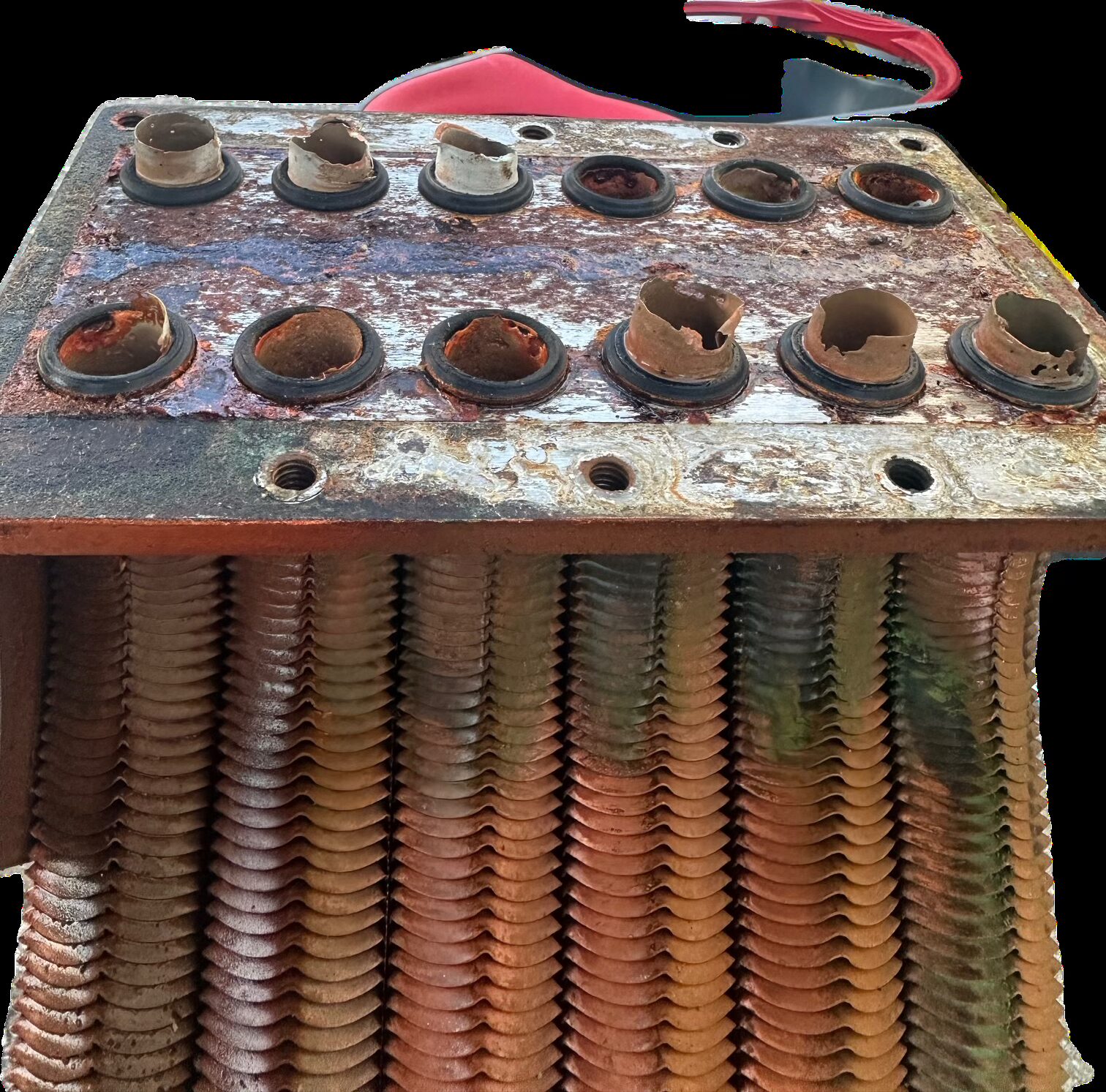
At Swim World Pools, we’ve seen what happens when pool water goes unchecked—and it isn’t pretty. The photo below shows a copper heat exchanger pulled from a customer’s heater. Their pH measured 6.2 and cyanuric acid (stabilizer) level hit 242—both dangerously off-balance.
The result?
Corrosive water that ate through copper tubing and destroyed the heater from the inside out.
When Water Turns Against You
Pool water that’s out of balance isn’t just “a little off.”
- Low pH (acidic water) dissolves metals and corrodes heater parts, pumps, and fittings.
- High cyanuric acid (CYA) makes chlorine ineffective, leaving water cloudy, unsanitary, and prone to algae.
Over time, this combination quietly damages the system until it fails completely—often costing thousands in replacement parts and labor.
The Hidden Costs of Poor Chemistry
Corrosive or unbalanced water doesn’t stop at the heater:
- Vinyl liners can wrinkle, fade, or crack.
- Concrete and plaster can etch or flake.
- Seals and gaskets wear out prematurely.
- Skin and eyes can become irritated even in “clean-looking” water.
Once corrosion begins, it’s nearly impossible to undo—making prevention the smarter (and cheaper) path.
How to Keep Your Pool in the Safe Zone
Balanced water protects your investment, your equipment, and your swimmers.
That means:
- Regular testing for pH, alkalinity, chlorine, and CYA levels.
- Adjusting with the right chemicals in the right doses.
- Avoiding “blind dosing” or guessing based on color strips alone.
The good news: We’ll test your pool water for free.
Bring a water sample to Swim World Pools, and our experts will analyze it on the spot. We’ll explain exactly what’s going on, show you how to correct imbalances, and help you extend the life of your pool and equipment.
 Swim World Pools
211 W Eastland St
Gallatin, TN 37066
 (615) 452-POOL (7665)
